Struggling with WASSCE Maths? Stop guessing. Let’s fix the gap step by step.
Sets & Logic Clinic
Every Sets & Logic Clinic lesson in one place: set notation, Venn diagrams (two and three sets), logical reasoning, binary operations and modulo arithmetic.
Sets, logic and operations are some of the most reliable marks on the WASSCE Mathematics paper, and some of the most avoided. The ideas are simple; the symbols and the careful reading are what trip learners up.
The Sets & Logic Clinic works in three parts: sets and Venn diagrams, logical reasoning, and binary operations with modulo arithmetic. Each lesson fixes one gap, with diagrams, worked answers and practice.
What you’ll be able to do by the end
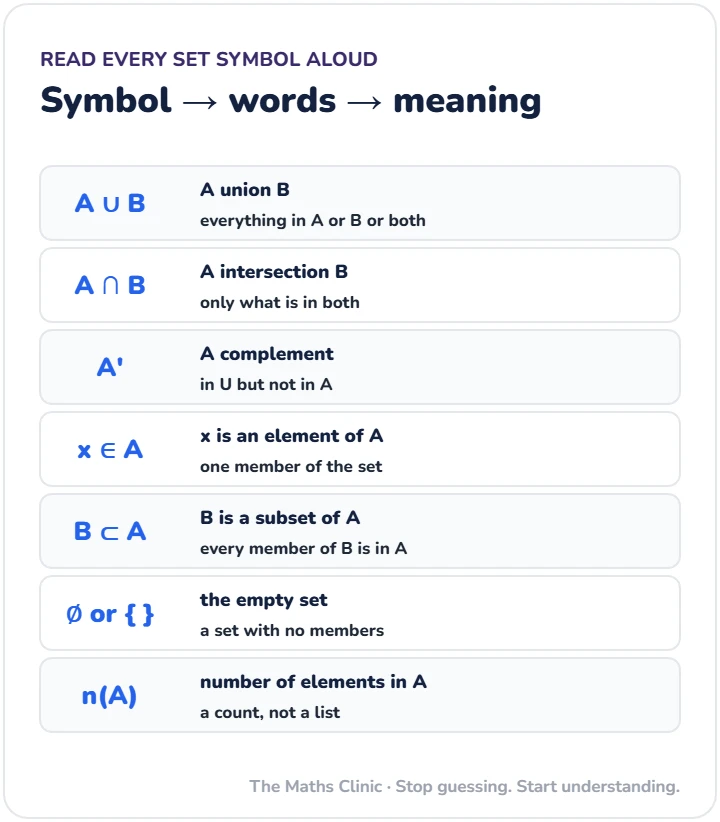
- Read every set symbol in plain words, and tell ∪ from ∩, ∈ from ⊂, and ∪ from the universal set U
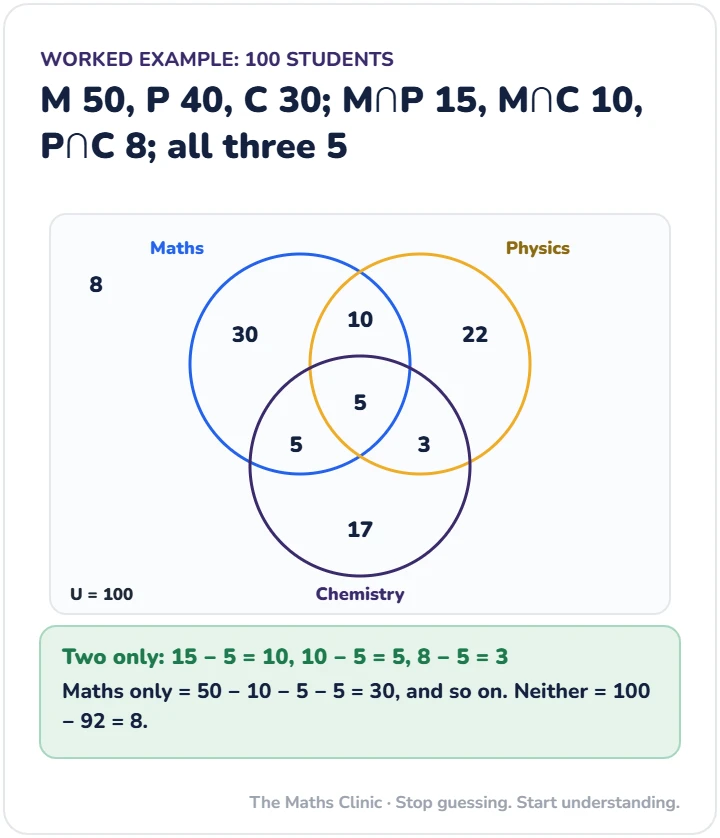
- Turn any word problem into a two- or three-set Venn diagram and answer both, only, neither, exactly one and at least one
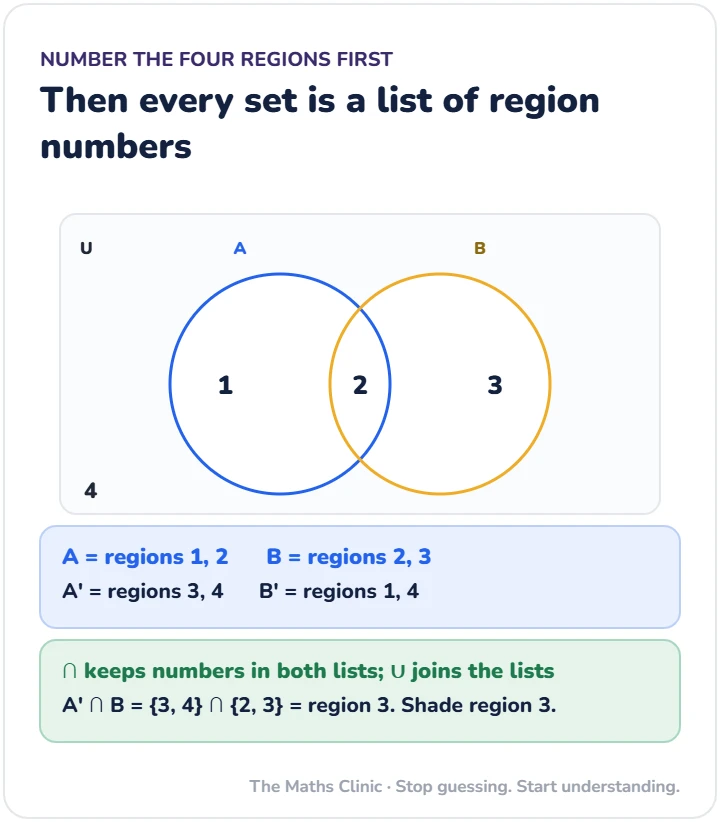
- Shade any region of a Venn diagram using region numbers
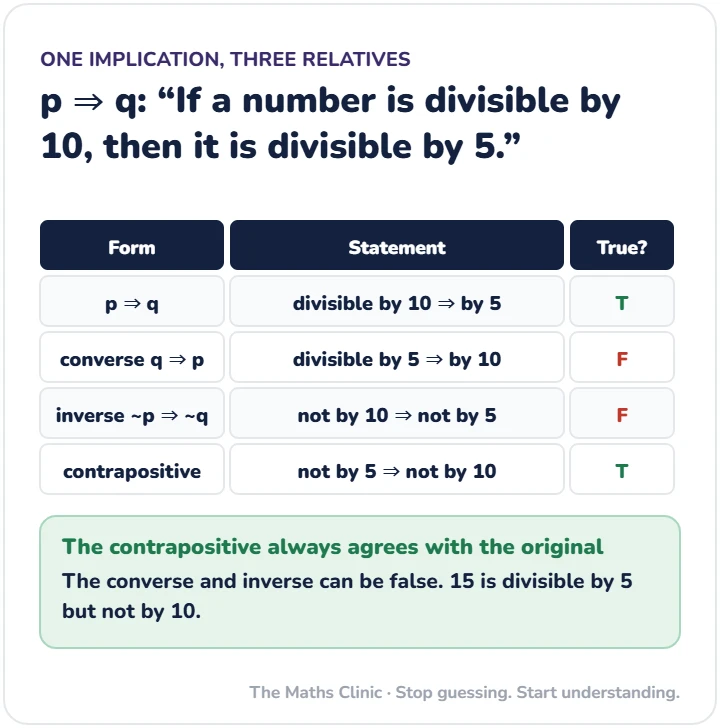
- Negate all, some and none statements, and use the converse, inverse and contrapositive correctly
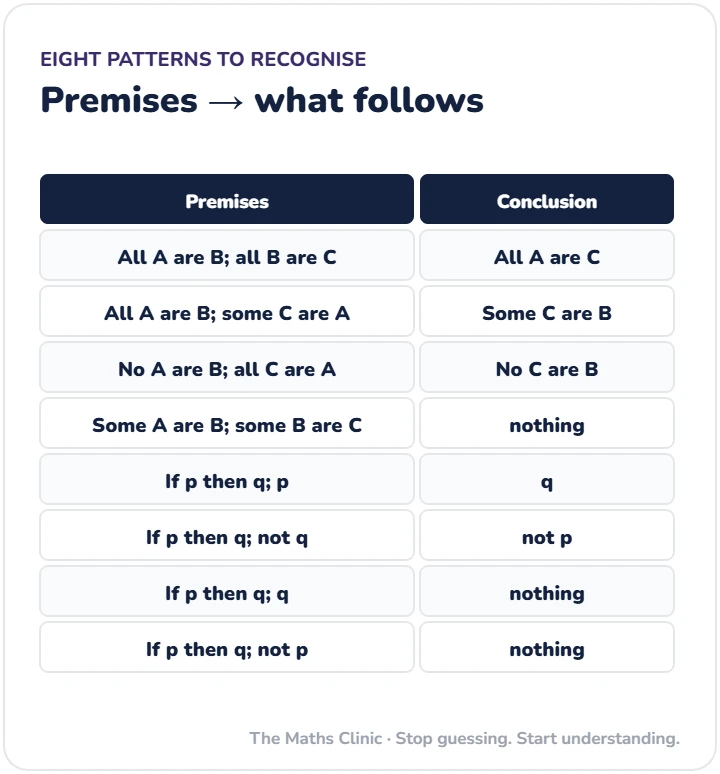
- Decide whether a conclusion follows, and give counterexamples
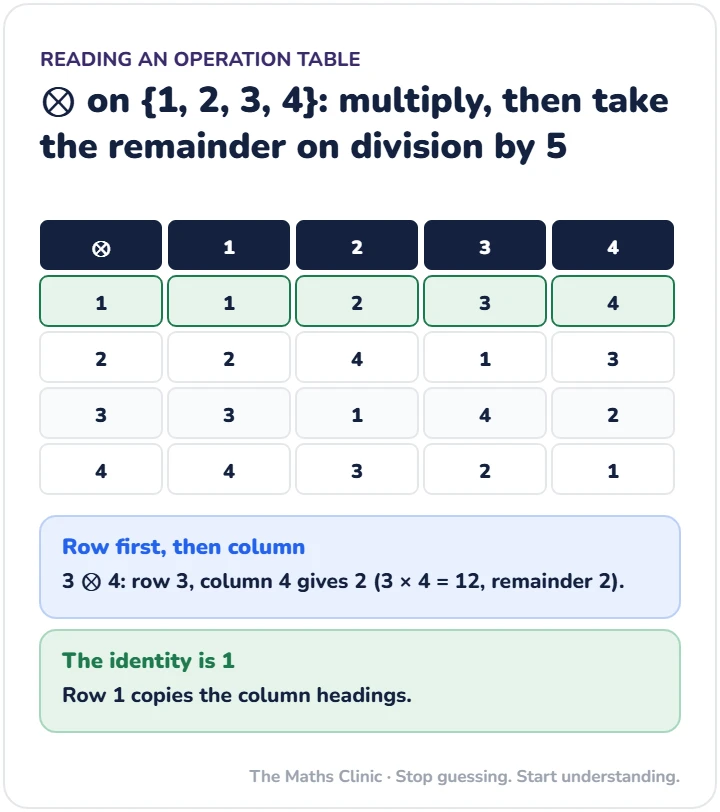
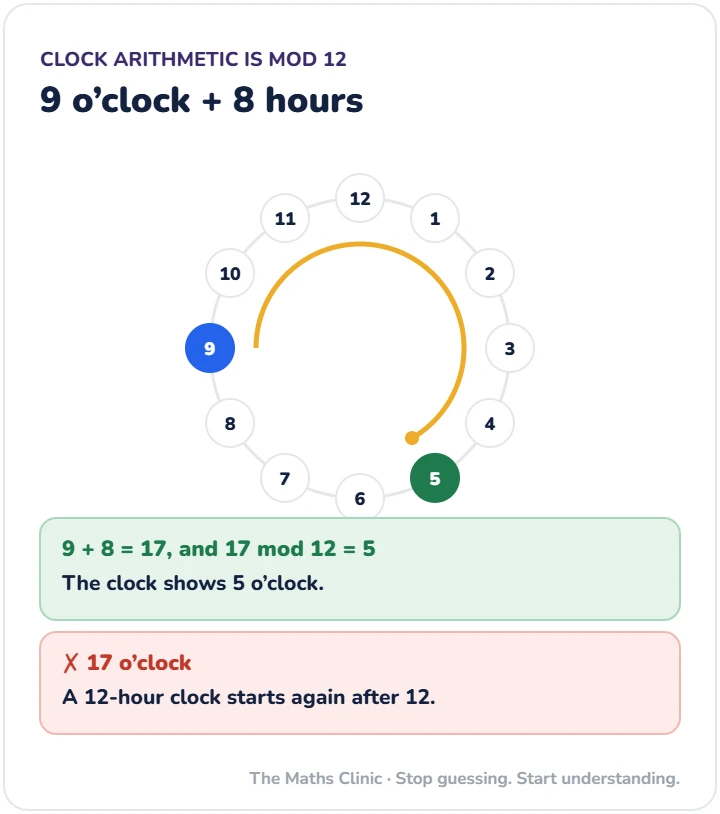
- Work binary operations, find identity and inverse elements, and do modulo arithmetic
Part 1: Sets and Venn diagrams
Learn the language first, then the pictures. Fill a Venn diagram from the overlap outwards and check that the regions add up to the total.
Part 2: Logical reasoning
A statement is true or false. Keep the direction of every “if … then”, negate “all” as “some … not”, and accept only conclusions that are forced in every picture.
Part 3: Binary operations and modulo arithmetic
Obey the rule, not the symbol. Substitute in order, find a fixed two-sided identity, and in modulo arithmetic keep only the remainder.
The lessons
The first Sets & Logic lessons go live on 21 December.
Practise as you go
After each lesson, try mixed questions in the Practice Zone. Not sure which topic is weak? Start with Find Your Maths Gap. Venn diagrams also power probability: see the Probability Clinic.
The mistakes examiners see most
| Mistake | Fix |
|---|---|
| A ∪ B written as only the shared part | ∪ is everything in either set; ∩ is the shared part |
| Pair total written in a “two only” region | subtract the centre (all three) first |
| “Some passed” read as “not all passed” | some = at least one |
| Negation of “all” written as “none” | all → some … not |
| Concluding p from “if p then q” and q | the converse does not follow |
| a * b = 2a + b, 3 * 5 = 15 | obey the rule: 3 * 5 = 11 |
| 29 mod 6 = 4 | 4 is the quotient; the remainder is 5 |
Questions learners often ask
Are sets and logic on the WASSCE Mathematics paper?
Yes. Sets and Venn diagrams appear regularly, often with a probability part; logical reasoning, binary operations and modulo arithmetic also appear, mostly as short questions.
Which lesson should I start with?
Start with the first lesson in the list (set theory mistakes), or with the first lesson of whichever part you find hardest.
I keep mixing up union and intersection. What should I do?
Read the symbol aloud in words before you work, and point to the region on a Venn diagram. The union and intersection lesson gives eight ways to stop mixing them up.
This clinic is part of How to Pass WASSCE and NOVDEC Core Maths.
Sources and further reading
These lessons are built on what WAEC examiners report year after year, matched to Ghana’s SHS curriculum.
- WAEC Chief Examiner’s Reports: the yearly reports on where candidates lose marks
- NaCCA SHS curriculum: the official Ghana Senior High School curriculum
- Ghana curriculum resources: official teaching and learning resources

Written by
Dickson Sarpong
NTC-certified SHS Mathematics teacher in Ghana with WAEC marking experience, and author of The Bridge Series textbooks. Every lesson here is built around the mistakes WAEC examiners keep reporting.
About DicksonStuck? Ask a question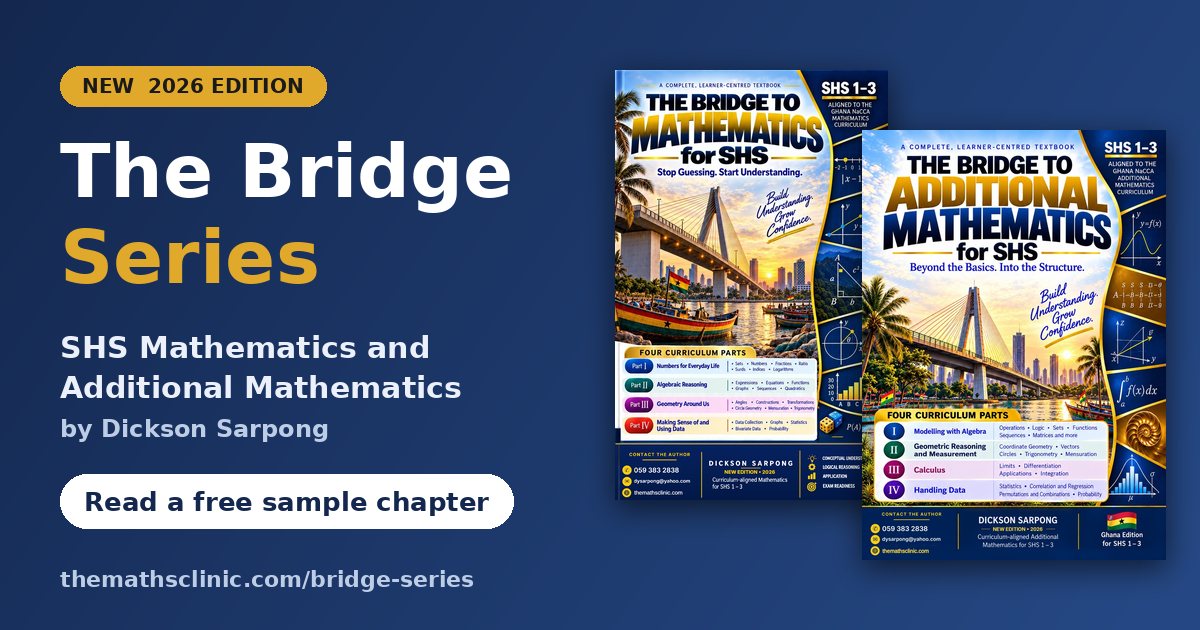
Want the whole topic, step by step? My textbooks, The Bridge to Mathematics and The Bridge to Additional Mathematics for SHS, follow the new curriculum and rebuild the basics as you go.
Read a free chapter →